Report of Hakuhodo DY ONE Advertising Technology Research Institute: Climate Adaptation with “Extreme Heat Tech”
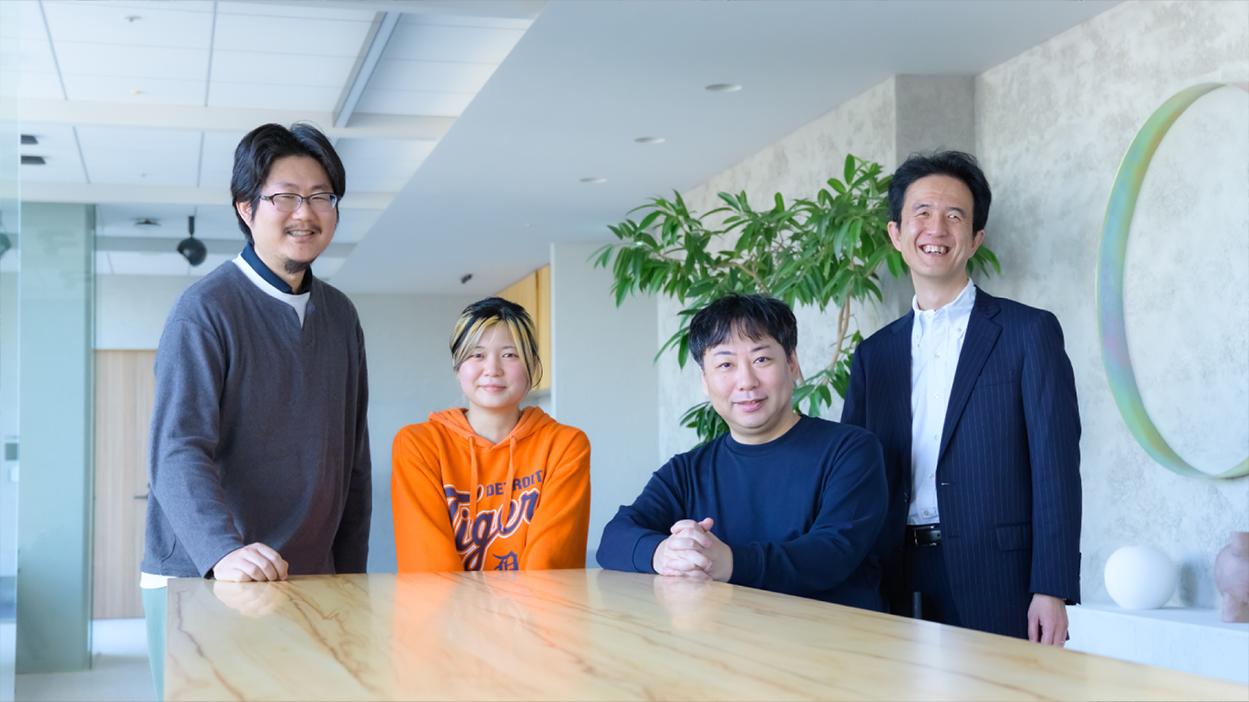
It seems that extreme heat has become the new normal of summer in recent years. Amid concerns about negative impacts on business practices and marketing, a trend is emerging to consider extreme heat as a new opportunity for business expansion. In this interview, Makoto Shimano of Hakuhodo Research Design Center asks Noriyuki Nagamatsu, Chen Chen and Niki Takahashi of Hakuhodo DY ONE about key developments and cases centered on “extreme heat tech.”
*This article was originally released on May 25, 2026 in “Sei-katsu-sha Data-Driven” Marketing Newsletter, published by the Hakuhodo DY Group.
Original article: https://seikatsusha-ddm.com/article/16813/
Various industries taking more action against extreme heat
Shimano
The impact of extreme weather resulting from global warming has been intensifying worldwide. In Japan too, intense extreme heat in summer is becoming inevitable, seriously affecting various industries including agriculture. But I hear that businesses are taking action.
Nagamatsu
First of all, the data tell us that the temperature rise in Japan since the 2000s has exceeded the global average. In particular, 2025 has seen record-breaking temperatures across the country. The temperature in Tokyo is now comparable with that in Manila and New Delhi in July to September, with the humidity sometimes exceeding the level of Bangkok or Shanghai. Some even argue that Tokyo now belongs to a subtropical zone.
Chen
The existence of three high pressure systems explains the torrid heat in Japan.
The well-known Pacific anticyclone pushes the rainy season front to the north, thus curbing the rise in the temperature. Last summer, however, it did not work well, causing a delay in the rainy season and keeping the temperature high. There is also the Tibet anticyclone that brings heated air from the continent, which is now joined by the southward-tilting anticyclone, discovered in recent years, which blocks the cold northeast wind. The overlap of those three anticyclones in the atmosphere effectively locks up the heat on the ground. This, combined with the phenomenon of water vapor feedback, largely explains the recent increase in the temperature.
Various data sources predict that temperatures will continue to rise for decades at least. So, we must now consider “adapting” to the warming, not only mitigating it.
As far as the impact of extreme heat on health is concerned, the Population Survey Report of the Ministry of Health, Labour and Welfare indicates that deaths by heat stroke are at almost disaster levels, and that the risk of outbreaks of various infectious diseases will rise due to biological changes of insects, for example, affecting those with a weak immune system, particularly babies, toddlers and the elderly. In economic terms, the data indicate that a 1°C rise in the mean temperature will generate multi-tiered impacts over the following 10 years, possibly lowering GDP. It will also trigger revisions to the Labor Code, specifically concerning working hours outdoors.
But it will also bring benefits in other areas. In agriculture, for example, new varieties of crops may become growable in cold areas, including tropical fruits, while tourism will gain traction in areas previously unsuited for travel due to cold weather, and leisure activities will increasingly become possible at night because the nights are not as cold as before.
Shimano
Could you tell us exactly what kinds of action are being taken in various industries?
Takahashi
Efforts to protect workers against heat stroke are progressing in the construction industry. Examples include the creation of rest stations at the workplace to cool down workers’ bodies, and the transformation of temporary toilets into cooling shelters by installing air-conditioners. Some companies have even developed in-house salt and nutrition supplements to prevent heat stroke. Further, one startup attracted public attention after developing a special cooling film sheet for use as a building material.
In the food sector, an increasing number of new products are now designed to require no cooking, such as frozen foods, so that you don’t have to prepare a hot meal in a hot room. Convenience stores feature sweets including desserts with salt or lemon to give a pleasant cooling sensation, or cold lunch boxes using frozen broth.
As far as daily goods are concerned, new products featuring a refreshing or cooling sensation are being developed, including bedclothes. In home electronics, emerging products include a fan to cool you after taking a bath – just hop onto the platform, and you get cool air blowing from below.
In insurance, products are emerging to cover the treatment, hospitalization and emergency transport costs for heat stroke. Since outdoor events may need to be rescheduled to avoid dangerous heat, some emerging insurance products now cover the loss of business opportunities for such reasons.
In leisure and entertainment, people are increasingly enjoying nighttime leisure activities including swimming in a pool, visiting an aquarium or botanical garden, and playing golf. Singapore and the Philippines used to be known as the best places for a nighttime safari, but this activity is now happening in Japan too. Since it is now difficult for children to play in parks during daylight hours, we are also witnessing an increase in safe and cool indoor play facilities.
Unique marketing cases taking advantage of extreme heat
Shimano
I hear that cases of data-driven marketing to address extreme heat have also been increasing.
Chen
More granular weather data on an hourly basis has become available in recent years. Businesses are increasingly predicting demand, etc. by looking at meteorological data provided by media companies. Thus, a global food manufacturer selling ice cream adjusts output to the sellout volume with an AI-powered production system based on weather data, effectively reducing food wastage.
Takahashi
Other food manufacturers in Japan are also taking action, forecasting area-specific demand based on Japan Weather Association data and adjusting budget allocations depending on the intensity of marketing campaigns, for example.
Nagamatsu
It’s also worth noting that weather data are used for informing not only sales promotion activities but also planning for product circulation, inventory management production and sales.
Takahashi
A global beverage manufacturer has initiated a DOOH campaign targeting hot hours and places. The campaign, implemented in places where people tend to feel hot such as festival venues, beaches and basketball courts in some of the hottest countries in the world including Brazil, the Philippines and Vietnam, deployed out-of-home ads depending on a range of perceived heat indicators such as atmospheric and surface temperatures, sensory indices, humidity and wind speed.
Shimano
Good. So, they are selecting the places where their products are likely to be most attractive based on hard data. It is interesting to learn that such new approaches are emerging in relatively traditional media channels including OOH.
Takahashi
Right. Companies also work with agencies to develop product packages that can withstand extreme heat. A Canadian food manufacturer has adopted a label made of a new heat insulating material for packaging purposes to prevent heat-induced degradation of its products. Another food manufacturer has launched a campaign combined with raising awareness of heat stroke for children, who tend to feel the heat more as they are closer to the ground than adults.
New kinds of marketing to address the changing behavior of sei-katsu-sha
Shimano
How about cases with regard to media?
Takahashi
Now that many people use a smartphone to post information on the local weather, we can monitor local weather conditions in more detail. It is interesting to see the emergence of UGC from those user posts in weather apps and weather news media.
Shimano
Meteorological equipment can only capture numerical information such as temperature and humidity. It is now possible to improve the accuracy of forecasts with the help of users posting photos of the sky and clouds. This is a noteworthy development in terms of a data-driven initiative and the potential of big data. Users will be more motivated to post weather photos because they realize the convenience and usefulness of such information. This is an inspiring trend from the perspective of community building.
Nagamatsu
Syncing user posts with livecasts to form part of the content is also designed to drive home the fact that voluntary posting itself is a socially useful act. I think all of this is working very well.
Takahashi
An IoT sensor for businesses has also been developed to provide minute-by-minute data including on lighting intensity, as well as temperature and humidity. It can visualize the risks of heat stroke and hypothermia, for example, providing heat and cold indices with pinpoint accuracy.
Shimano
Data can be more informative by combining the evolution of equipment and user communities. And media reflect the outcome.
Takahashi
Features focusing on extreme heat conditions include a pedometer app that calculates and proposes shaded routes based on three-dimensional information including on the height of the sun and the configuration of buildings. For pet owners, there’s an app to tell you if the weather is suitable for dog-walking based on atmospheric pressure and temperature data. It seems that a wealth of meteorological data is increasingly being processed into necessary information for provision to sei-katsu-sha.
Some apps also provide weather data for businesses to help predict revenue and footfall. API is also available for integration with measures taken by businesses to prevent heat stroke.
Shimano
The adoption of API might boost meteorological data-driven initiatives.
Nagamatsu
Those corporate efforts imply that companies are trying to find solutions to the difficult workplace conditions caused by prolonged extreme heat in summer, taking into account the actual working environment of their employees.
As an advertising company, we hope to proactively provide marketing support in view of such changes.
Shimano
That’s right. We will have to tackle the challenge of extreme heat as a major trend for decades to come. I think the cases you highlighted today have given us some clues about how to address and adapt to climate change in our daily lives. The extreme heat tech business is set to enjoy accelerated growth going forward.
Takahashi
It will not be enough under the current living environment with extreme heat to think about marketing within a timeframe defined by temperature alone. Assuming that outdoor activities will decrease to avoid heat and that people will move to cooler places including indoors and shaded areas, marketing analysis will have to take locational changes into account going forward.
Shimano
Extreme heat is leading to unprecedented changes in behavior and practices.
Marketers must take such factors into account to understand the situation of sei-katsu-sha.
Thank you very much for your insightful remarks just before another season of extreme heat.
*Titles and positions reflect the status at the time of the interview.

Noriyuki Nagamatsu
Head of the Research and Development Division, Technology R&D Headquarters, Hakuhodo DY ONE
Noriyuki Nagamatsu joined Digital Advertising Consortium (currently Hakuhodo DY ONE Inc.) in 2004. He developed advertising businesses based on audience targeting and video/in-game advertising, as well as research and development of digital marketing effectiveness indicators. Since 2019, he has led the Research and Development Division, conducting R&D on digital businesses using technology such as AI, IoT and XR. Serving as a lecturer at “HAL”, a specialist college, he co-authored “Handbook for Net Advertising” (JMA Management Center Inc.).

Chen Chen
Head of the Advertising Technology Research Department, Research and Development Division, Technology R&D Headquarters, Hakuhodo DY ONE
Since joining Hakuhodo DY ONE in 2023, Chen Chen has been studying cutting-edge technologies, overseas agencies and laws and regulations to analyze adaptability to the advertising domain at the Advertising Technology Research Department, Research and Development Division, Technology R&D Headquarters. With deep insights into a wide range of technological trends including AI, sensors, semiconductors, gaming and UGC, he is promoting knowledge provision and R&D on new disciplines to create business opportunities for clients.

Niki Takahashi
Advertising Technology Research Department, Research and Development Department, Technology R&D Headquarters, Hakuhodo DY ONE
Since joining Digital Advertising Consortium (currently Hakuhodo DY ONE) in 2020, Niki Takahashi has been involved in the analysis of trends in digital business and business development centered on ad tech, social media and technologies closer to sei-katsu-sha.

Makoto Shimano
Executive R&D Director, Research Design Headquarters, Hakuhodo
After joining Hakuhodo, Makoto Shimano was assigned to the marketing department to engage primarily in the development of integrated communication on behalf of clients in various industries including telecommunication, automobiles, IT services, distribution and beverages. In 2012, he was transferred to a new data-driven marketing department where he was responsible for improving strategy planning, solution development and DX promotion through the integration of marketing and media data, among others. In 2020, he was concurrently appointed as head of the Media Environment Research Lab and of the Knowledge Innovation Division, publishing research papers including on future forecasts of the media environment. He assumed his present office in 2025.